Key Takeaways:
- Choose art that’s the right width for your furniture, about two-thirds to three-quarters of its size, to create balance in your space.
- Hang your art so the center sits around 57 inches from the floor for the most natural, eye-level view.
- Leave roughly three inches between frames or between art and nearby furniture to keep your display feeling open and intentional.
Choosing art for a bedroom, living room, kitchen, or any other space begins with a simple question: how do you want the room to feel? The art you choose sets the tone, so think about the mood, color story, and emotion you want to convey. Is it calm and collected, bold and expressive, or warm and inviting? Let those feelings guide your style and subject matter.
Once you’ve found a piece you love, size is what makes your wall art feel intentional rather than accidental. The right scale can tie an entire room together, while the wrong one can throw it off balance. Too small and the art gets lost; too large and it overwhelms the space. Measuring before you buy ensures your favorite piece actually fits your room and your furniture.
To make things easy, Minted’s stylists have refined a set of practical, proven rules that take the guesswork out of art sizing. These simple formulas and visual tricks will help you feel confident choosing dimensions that complement your space and your personal style.
General Rules for Choosing the Right Art Size
Before you start measuring your walls, it helps to understand fine art sizes. Prints are measured by width × height, unlike TVs, which are measured diagonally. When you shop for framed art at Minted, the size you see online already includes the frame dimensions, making it easier for you to picture how it will fit in your space.
Just keep in mind that, depending on the frame width profile and the matting or border style, the actual print inside may be slightly smaller.
Empty Wall
If you’re working with an empty wall, think of it as a blank canvas for your personality. A few large pieces can make the space feel intentional, while smaller works can bring charm and intimacy to tight areas like entryways or landings.
- Aim to fill 60–75% of the wall width with art for a balanced look.
- Use portrait pieces in narrow areas to emphasize height.
- For expansive walls, try a diptych, triptych, or gallery-style arrangement to cover more space.
- Use Minted’s gallery wall guide for layout inspiration and styling ideas.
Above Furniture
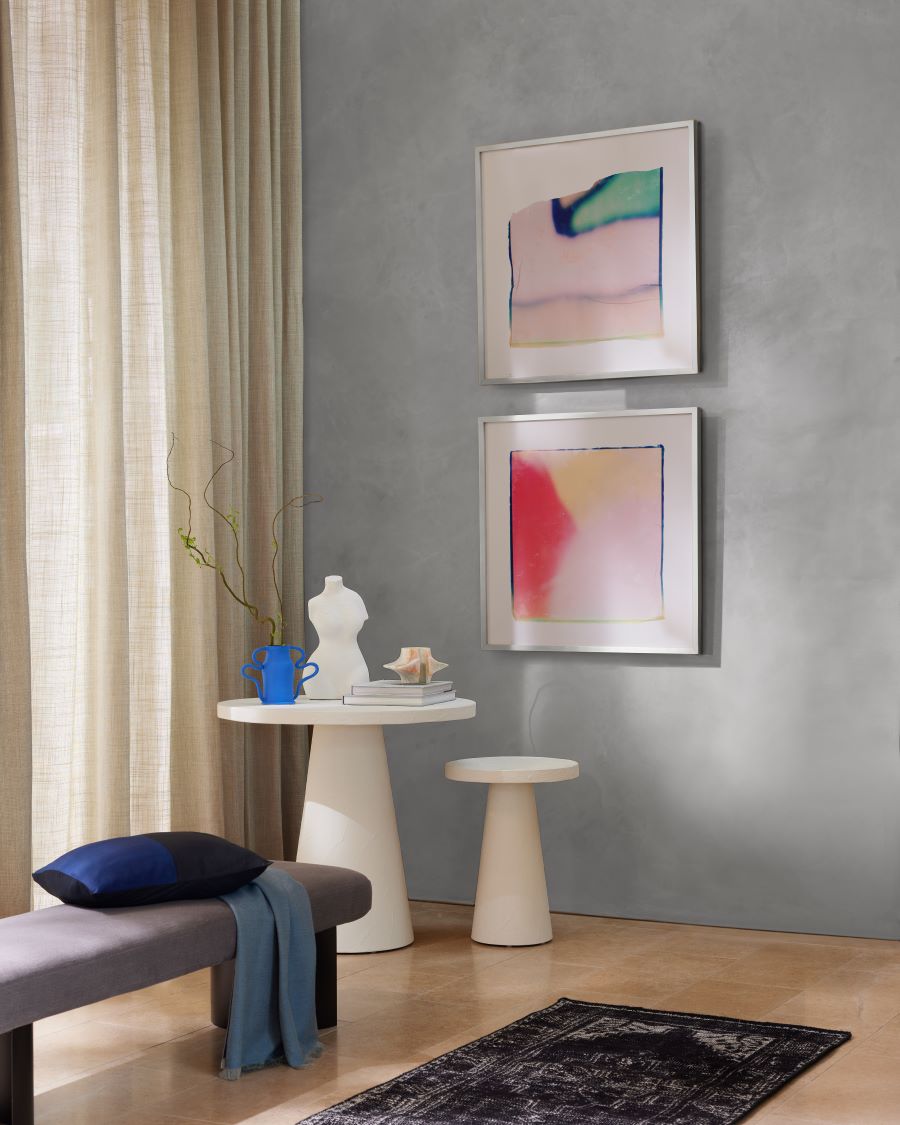
Hanging art above furniture is all about creating visual balance. You want your piece to feel connected to the furniture below it—not floating too high or crammed too close. The right proportions make the whole vignette feel intentional and pulled together.
| Furniture | Recommended Art Width | Recommended Vertical Gap |
|---|---|---|
| Sofa | ⅔–¾ of furniture width | 8–10" above sofa back |
| Mantle | ⅔–¾ of mantle width | 6–12" above mantle |
| Headboard | ⅔–¾ of bed width | 3–8" above headboard |
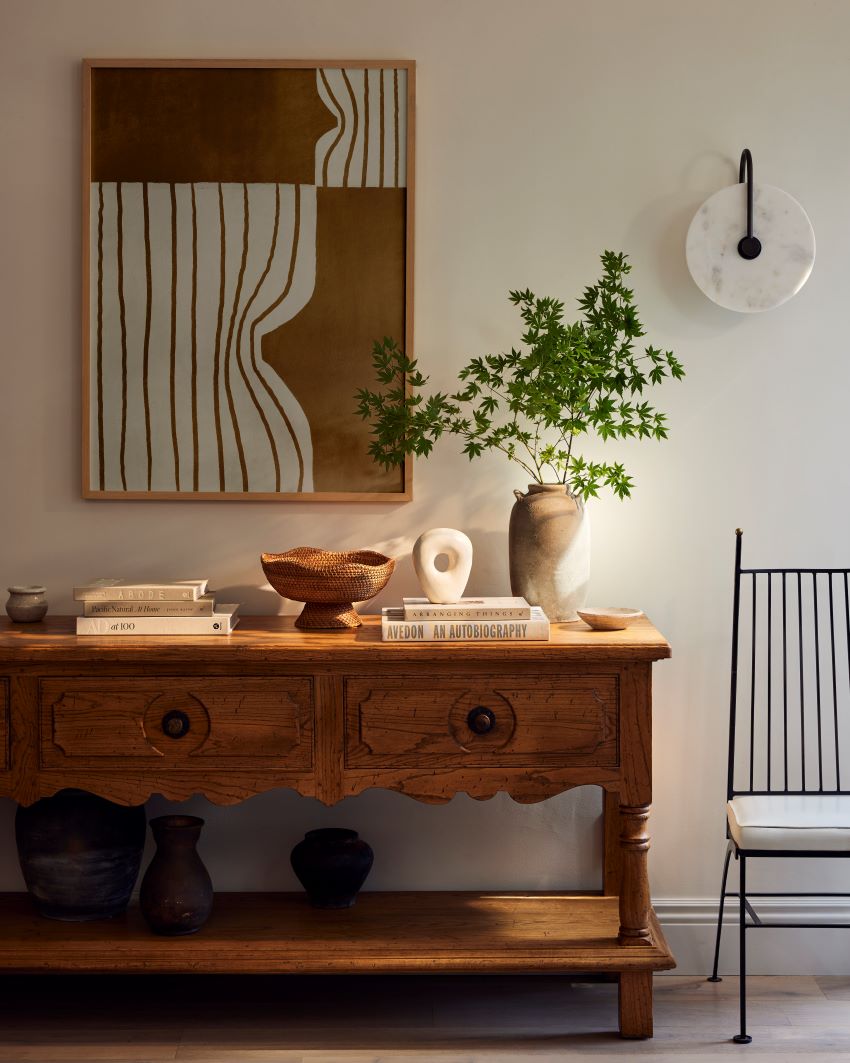
| Console | ⅔–¾ of console width | Lean or hang at eye level |
As with any design rule, there are clever ways to break these guidelines. If you want a more relaxed look, for example, you could set larger art pieces on a console or mantel and allow them to lean against the wall (though you’ll want to make sure they’re still roughly at about eye level).
Hanging Height
Hanging art at the right height helps your space feel cohesive and comfortable. Keep the center of your piece at eye level, about 55–60 inches from the floor, so it naturally aligns with your line of sight. From there, small adjustments make a big difference depending on the furniture or architectural details around it.
- Center your art at 57 inches from the floor for an eye-level look that works in most rooms.
- Adjust height slightly if you have lower furniture or taller ceilings—aim for balance with surrounding elements.
- Keep art anchored to the furniture below by maintaining a small gap so it feels visually connected.
- Skip the eye-level rule for very tall pieces, mantles, or high headboards; instead, focus on overall proportion and harmony.
Additional Design Details to Consider When Choosing the Right Art Size
Every room has its own unique quirks, such as room size and wall space, that affect how your art will look. Thinking about these details early helps you choose pieces that complement, not compete with, the space.
Room Size
There’s no universal rule for how big a piece of art should be within a room. Large art can make small spaces feel bold, while smaller prints can add subtle charm. Instead of focusing just on room size, consider your focal point and how you want the space to feel.
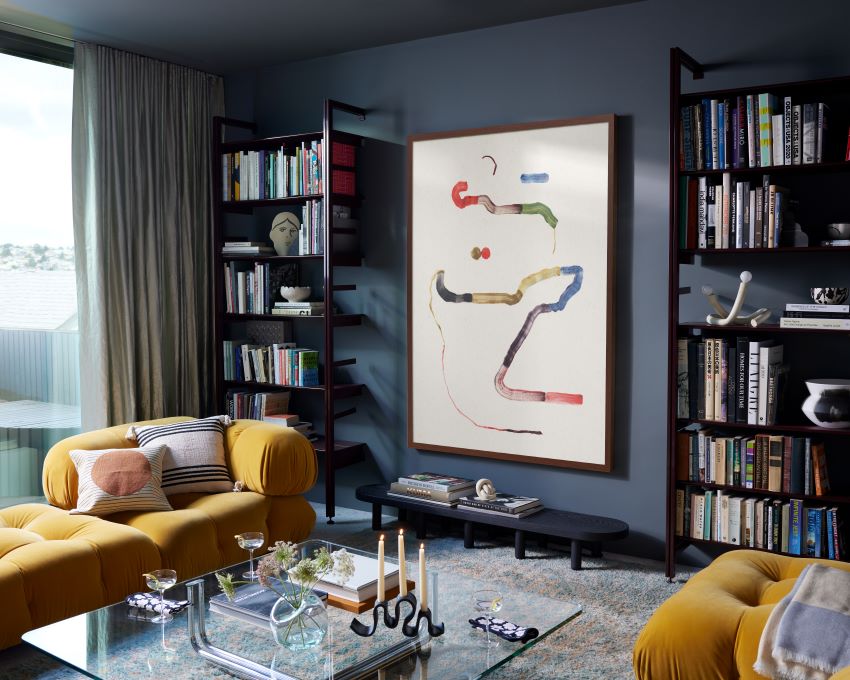
For a clean, minimal look, go with one large print as a center point. For an eclectic space, balance vintage or mismatched pieces with several smaller prints. If your room includes large sliders, windows, or built-ins, choose a statement piece that visually balances those features.
Wall Space
When considering what print size will look best in your space, you’ll want to take all of the elements of the wall into account. This includes furniture placed against the wall, lighting (including sconces and floor lamps), shelves, windows and window treatments, tall houseplants, etc. Once you have all of those elements mapped out, you can use the negative space to determine what size and which orientation your print or prints should be.
Keep in mind that the main goal here is to create a sense of balance between all of the existing elements in the room, which can be tricky!
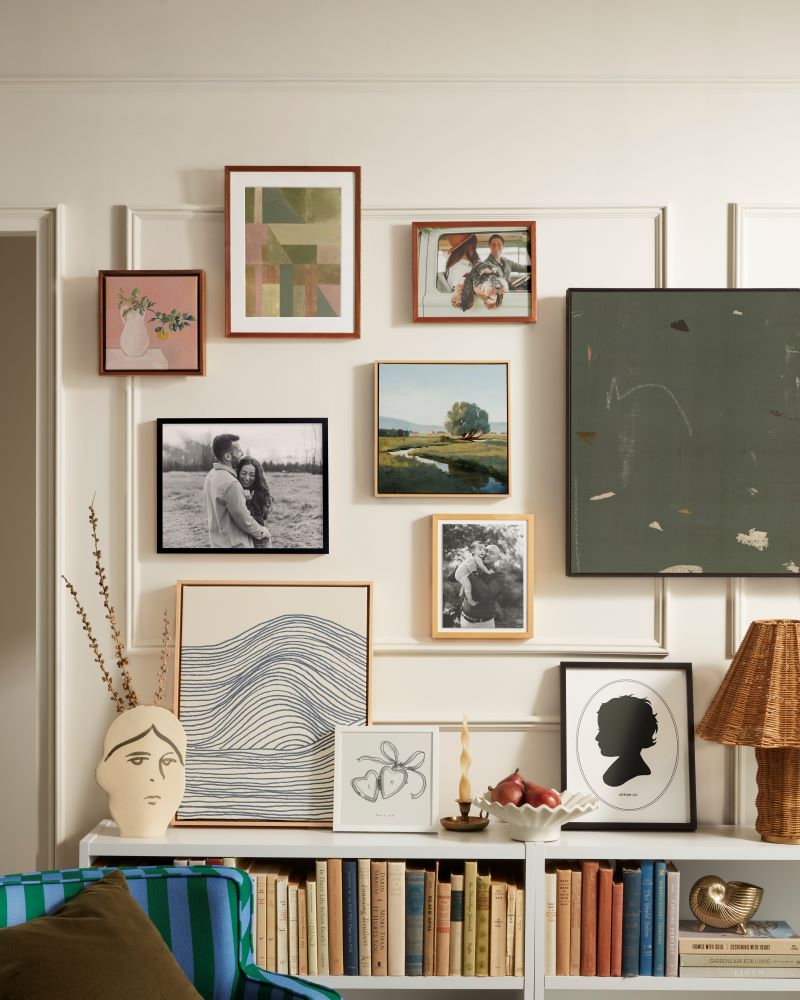
Abstract Geometry by Lucrecia Caporale, The Big Picture: Landscape Framed Photo by Minted, The Way Forward by Stephanie Goos Johnson, Play by Shio Whitehead, 11x14 Float Mount Natural Framed Photo by Minted, Locket: Custom Print by Ani Somi, Cameo Shilouette: Custom Print by Minted
Gallery Walls
If one large-scale print doesn’t appeal to you, gallery walls are a great option for rooms of all sizes. There are tons of ways to arrange a gallery wall, from symmetrical grids to eclectic mixes of sizes, orientations, and styles.
If you’re going eclectic, choose a focal piece (not always the biggest) and center it at eye level along the width of the open space. Then layer smaller personal prints and larger art for depth. You can also include maps, custom house portraits, and framed photo prints for personalization.
To test layouts before hanging, use the butcher paper method: cut paper to size, tape it to the wall, and adjust until it feels right.
Art Pairs
Using a pair or set of prints can create a large footprint on an expansive wall. If the wall is wider than it is tall, a landscape pair can be ideal. If you love a vertical print, pair it with another portrait piece to cover more width. You can also flank fireplaces, doors, or windows with pairs to frame the architecture.
Choosing the Right Orientation
Choosing the right orientation for your art can change how your room feels. The direction of your art influences balance, flow, and how your space is perceived, so take a moment to think about what best complements your wall and furniture.
- Portrait orientation means the artwork is taller than it is wide, like the Mona Lisa. It draws the eye upward, adding height to narrow or vertical spaces. Great for staircases, kitchens, or small wall sections.
- Landscape orientation means the artwork is wider than it is tall. It helps a space feel broader and more grounded, working beautifully above beds or sofas.
- When in doubt, let your furniture shape guide you—vertical art above tall pieces, horizontal art above wide ones.
- If you can’t decide, a square print always adds balance and versatility.
“When deciding between landscape or portrait prints, it’s generally advised to orient them according to the available wall space,” says Melanie, who, as one of Minted’s Art Stylists, has helped thousands of customers find the perfect artwork for their unique spaces. “If you have a long wall with lots of furniture placed against it, you might decide a few portrait prints would be better suited than one large horizontal print because of the separation on the wall due to the furniture placement.”
Frames & Matting
Frames and matting do more than hold your art—they shape how the entire piece feels. The right pairing adds polish, depth, and personality, bringing your style to life whether you prefer modern minimalism or timeless layering.
- Adding a mat makes the visible art smaller but adds breathing space and sophistication.
- For large walls, chunky frames or wide mats give art more visual weight and presence.
- For a minimalist look, float mounting within a slim frame keeps things airy and light.
- Try framed canvas prints for texture, or display photography with acrylic mounts for a sleek, gallery-style finish.
- Remember that frame and mat options change the overall mood—choose matted for traditional spaces or aluminum-mounted for a contemporary edge.
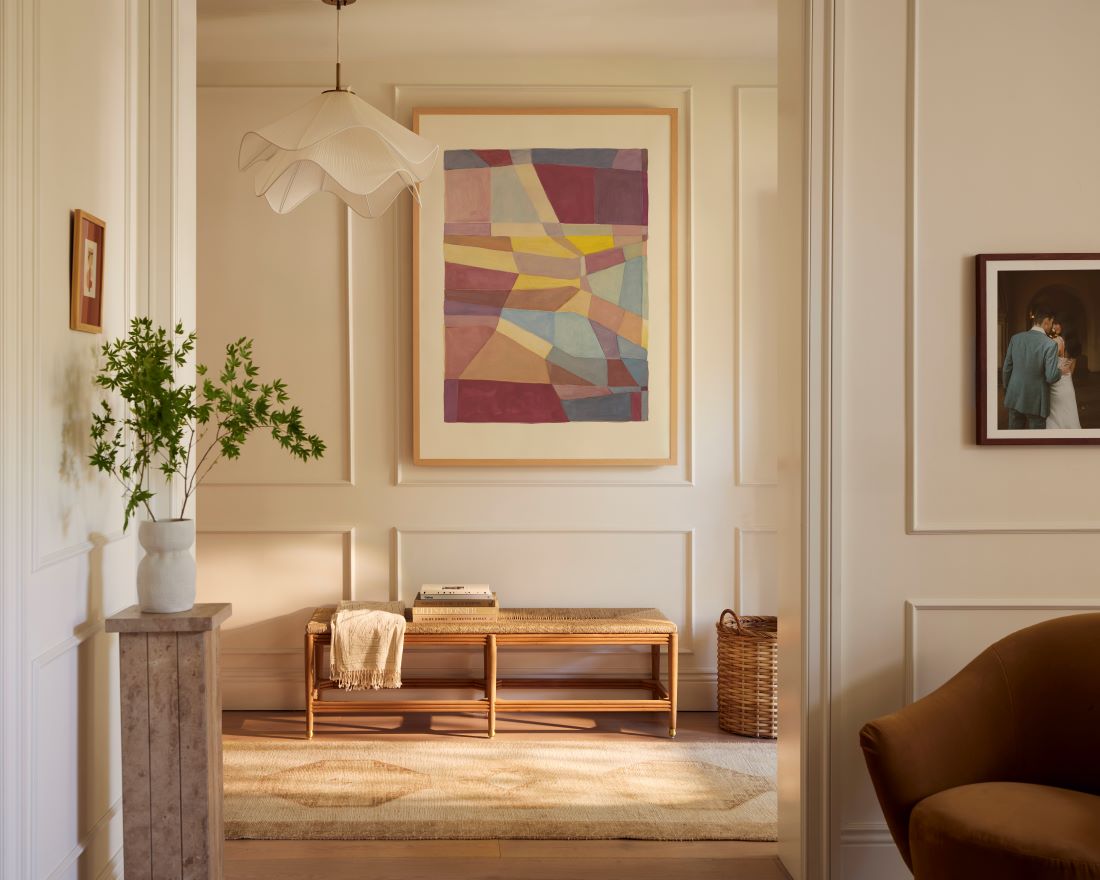
Solving Styling Dilemmas
While all of these tips will help guide you to choosing the right piece for any space, there are a few tricky spaces where we often see our clients struggling to choose art for.
Here’s what to know:
- Tight rooms: In small or narrow spaces like bathrooms or home offices, leave extra space between prints to avoid a cluttered look.
- Hallways: Gallery walls add personality to long, narrow areas, while a single large piece suits wider halls. Minted’s slim 1.5” frames fit even tight spaces.
- Bright rooms: If your art gets direct sunlight, choose UV-protective glass or canvas prints to reduce glare and protect your piece.
- Stairwells: Gallery walls are also a great option for stairwells, as the layout can be modified however you need it to flow with your home’s unique layout.
The Right Art Size: Frequently Asked Questions (FAQs)
Choosing the right art size can be pretty confusing, so we’ve gathered answers to the questions Minted stylists hear most often. These quick tips are designed to help you hang, size, and style your art with confidence.
How do I choose the right art size for my wall?
You can choose the right art size for your wall by measuring your available space and applying the ⅔–¾ rule of furniture width or 60–75% of wall width. This rule keeps proportions balanced and ensures the piece complements, rather than overwhelms, your room. Don’t forget to consider how frame size adds to the overall footprint.
How high should I hang my wall art?
You should hang your wall art so the center sits about 57 inches from the floor, which is roughly eye level for most people. This height helps your art connect visually with the rest of the room and avoids making it feel too high or disconnected from nearby furniture.
What art size works best above a sofa or bed?
The best art size above a sofa or bed is ⅔–¾ of the furniture width, which keeps the arrangement feeling balanced. For example, above a queen bed, aim for a 40–45-inch wide piece; above a king, try 54–60 inches wide. Leave about 3–10 inches between the top of the furniture and the frame so it feels connected but not cramped.
How much space should be between frames in a gallery wall?
Keep about 3 inches of space between frames in a gallery wall. This small gap helps each piece breathe while maintaining a cohesive look. Before hanging, use paper templates or painter’s tape to visualize spacing and alignment.
What frame and mat options should I choose for my prints?
Choose frame and mat options that enhance the artwork and reflect your interior style. Wider mats and thicker frames make pieces feel more substantial, while float mounts and acrylic finishes create a sleek, modern vibe. Always check the total outer dimensions to make sure the framed piece fits your intended wall space.
How many walls should I decorate in my living room?
You should decorate as many walls as your space can comfortably support. Start with a focal wall to anchor the room’s style, then build around it with smaller accents. Balance is key—leave some walls blank so your eye has space to rest.
Where should I hang a large art piece in my home?
Hang large art pieces where they’ll serve as a focal point—like over a sofa, console, or in an entryway. Keep the center at around 57 inches from the floor, and make sure the art visually ties to nearby furniture or architectural details. This creates a cohesive, gallery-like feel without overwhelming the space.
Bringing Your Wall to Life With the Right Art Size
The right art size makes all the difference. It turns an empty wall into a story, a sofa backdrop into a focal point, and a single print into something that feels custom-fit to your home. Once you’ve measured, planned, and tested layouts, trust your instincts. The best choice is the one that feels balanced and makes you smile every time you walk by.
When you’re ready to find your perfect fit, explore Minted’s collection of art prints to discover pieces you can make uniquely yours.